

- Lucca, Piazza dell'anfiteatro an der Stelle des römischem Amphitheaters. (Bild: Zyance).


- Lucca, Luftbild der Piazza dell'anfiteatro.


- Lucca, Ansicht der Außenfront des Amphitheaters in einer Ansicht des 19. Jhs.

Lage
 Google maps
Inschriften
CIL XI 1527:
Q(uinto) Vibio I[---]
ex quinqu[e dec(uriis) praef(ecto) alae vel cohortis]
Hispanorum ae[dili ---]
hic HS C(milia) in opus amp(h)ithe[atri dedit]
in annos decem et cum [perfici res]
publica decrevisset per[ficiendum esse pecunia(?)]
publica ex testament[o ---]
a quinquennalibus [---]
[s]ua inpensa fecit e[t ---]
[reli]nqueret t[---]
[---]sima [
„Quintus Vibius ..., Angehöriger der fünf Dekurien, Präfekt der Ala und der Kohorte des Hispanier sowie Ädil: Er stiftete 100.000 Sesterzen für den Bau des Amphitheaters, zahlbar in zehn Jahresraten; und nachdem die Gemeinde beschlossen hatte, das Vorhaben aus öffentlichen Mitteln fertigzustellen, führte er – dem Willen des Stifters entsprechend – die Vollendung auf eigene Kosten durch...”
Lit.: S. Demougin, Les juges des cinque décuries originaires de l'Italie, Anc. Soc., 6, 1975, 170-171 Nr. 39; G. Ciampoltrini, Municipali ambitione. La tradizione locale negli edifici per spettacolo di Lucca romana, Prospettiva, 25, 1981, 42 Anm. 34; G. L. Gregori, Epigrafia Anfiteatrale dell'Occidente Romano, II. Regiones Italiae VI-XI (Rom 1989) 80-81 Nr. 63 Taf. XXII 5.
Maße
Außen: 107 x 79 m
Innen: 67 x 39 m
Beschreibung
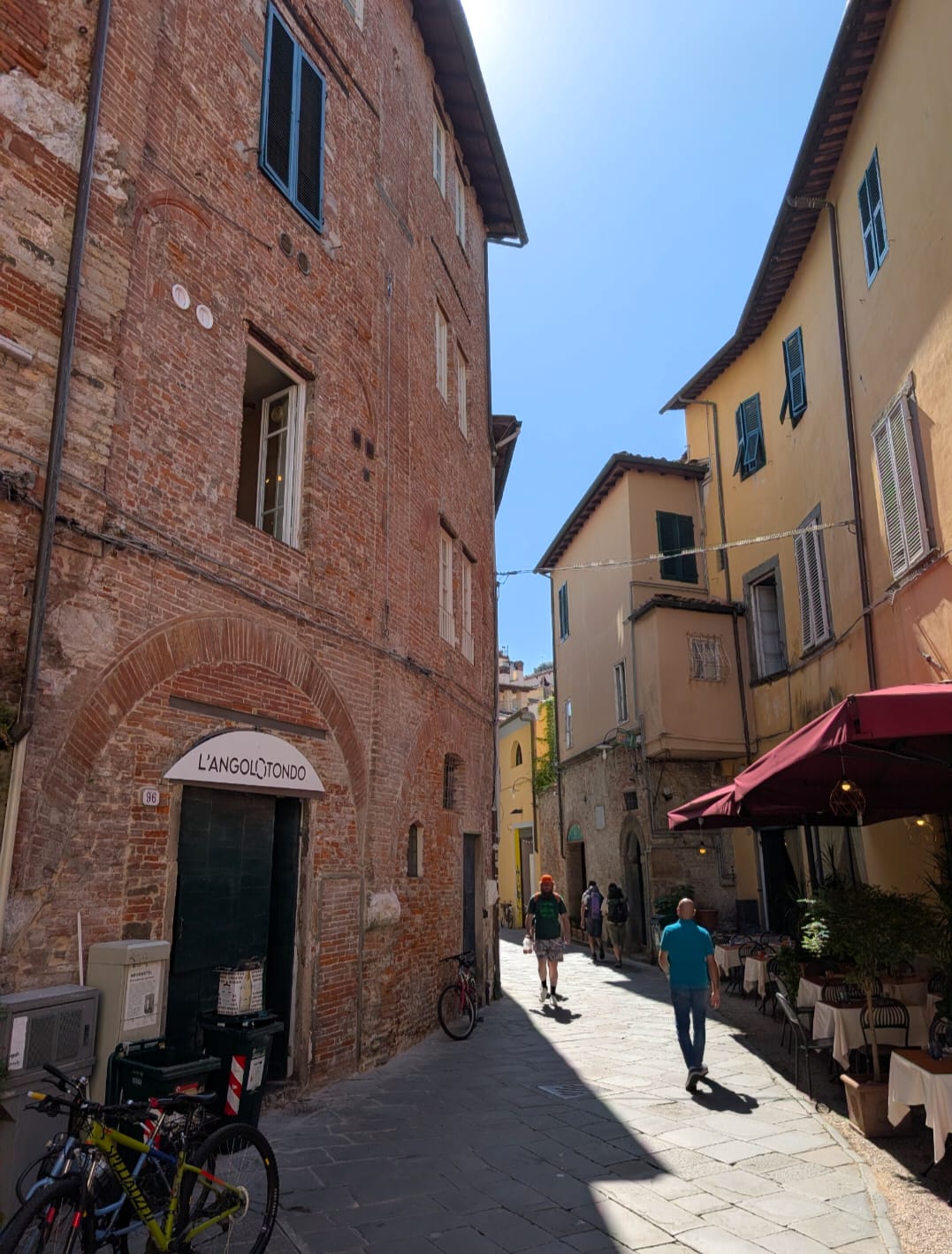
Das römische Amphitheater ist mittelalterlich überbaut. Seine Form zeichnet sich deutlich in der Piazza dell'anfiteatro ab.
Bildergalerie
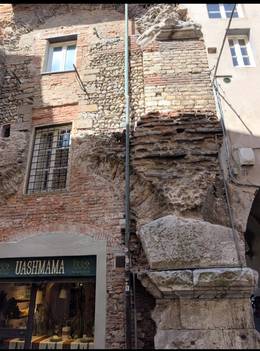
- Lucca, mittelalterlich verbaute Außenfassade des Amphitheaters (Bild: Belisarius Gogräfe)
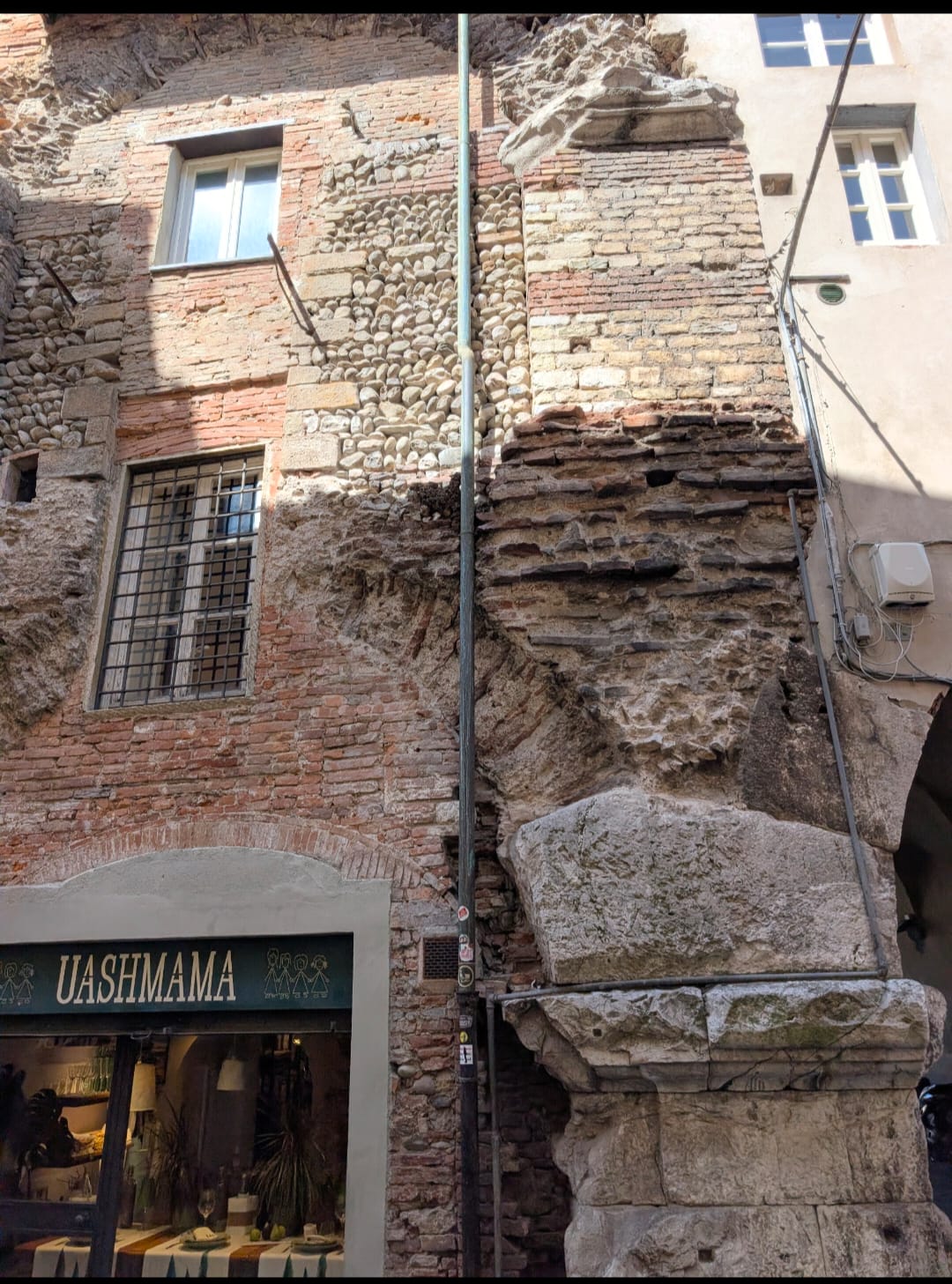
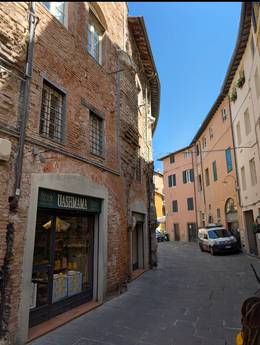
- Lucca, mittelalterlich verbaute Außenfassade des Amphitheaters (Bild: Belisarius Gogräfe)
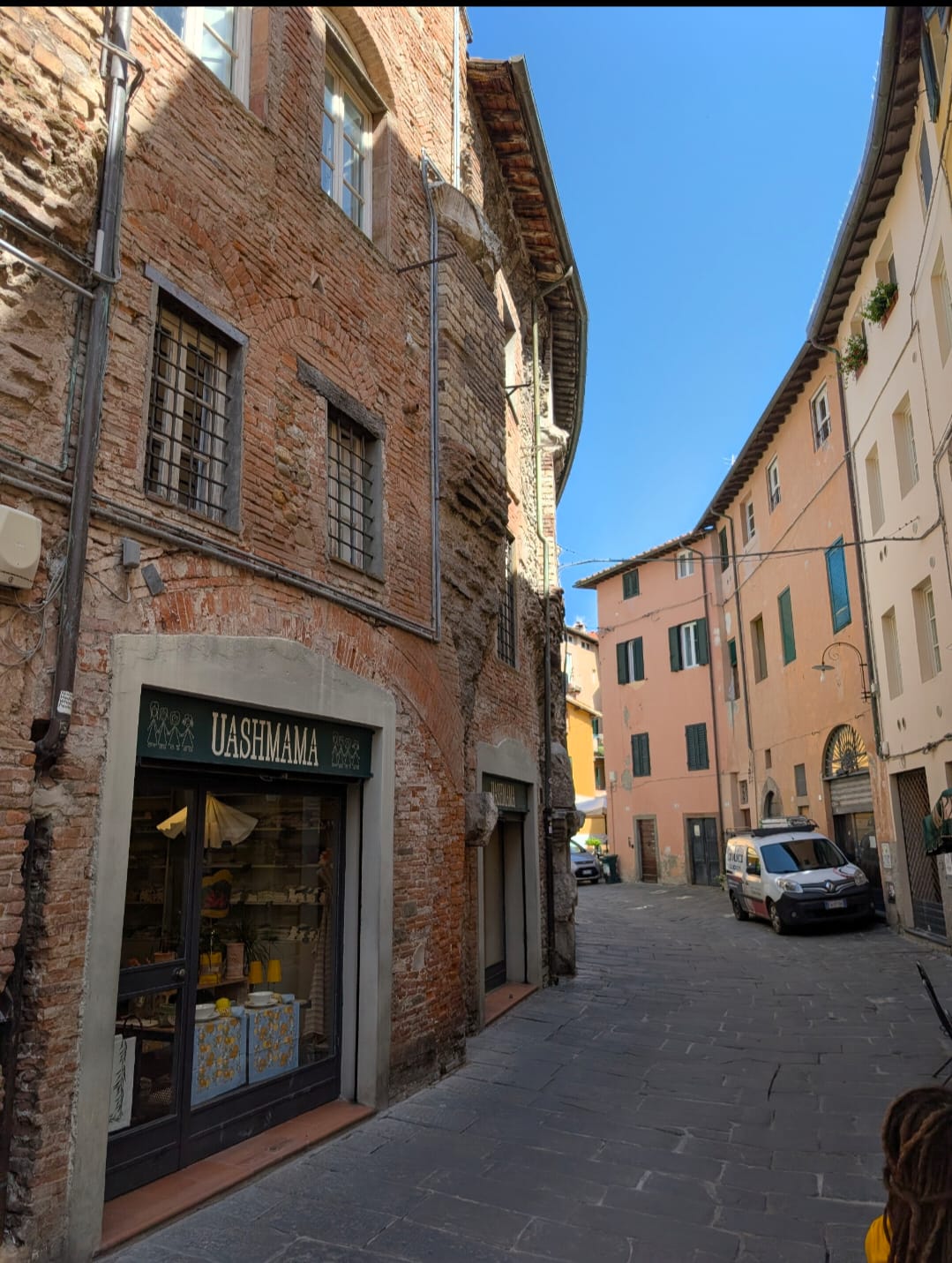
- Lucca, mittelalterlich verbaute Außenfassade des Amphitheaters (Bild: Belisarius Gogräfe)
Literatur
J.Cl. Golvin, L'amphithéâtre romain. Essai sur la théorisation de sa forme et de ses fonctions, I-II (Paris 1988) 160 Nr. 135.
P. Pinon, Approche typologique des modes de réutilisation des amphithéâtres de la fin de l'Antiquité au XIXe siècle, in: C. Domergue - Chr. Landes - J.-P. Pailler (Hrsg.), Spectacula I, Gladiateurs et amphithéâtres, Actes du colloque tenu à Toulouse et à Lattes les 26, 27, 28 et 29 mai 1987 (Lattes 1990) 103-127. 111 Abb. 22. 25.
R. G. Chase, Ancient Hellenistic and Roman Amphitheatres, Stadiums, and Theatres – the way they look now (Portsmouth, New Hamphshire 2002) 471.
G. Tosi, Gli edifici per spettacoli nell'Italia romana (Rom 2003) 417 f. Taf. IX 69-74.
G. Binder, Lucca - Urbane Tradition und Kontinuität, Antike Welt, Heft 2, 2016, 77-78 Abb. 1-4.
weblinks:
Literatur
J.Cl. Golvin, L'amphithéâtre romain. Essai sur la théorisation de sa forme et de ses fonctions, I-II (Paris 1988) 160 Nr. 135.
P. Pinon, Approche typologique des modes de réutilisation des amphithéâtres de la fin de l'Antiquité au XIXe siècle, in: C. Domergue - Chr. Landes - J.-P. Pailler (Hrsg.), Spectacula I, Gladiateurs et amphithéâtres, Actes du colloque tenu à Toulouse et à Lattes les 26, 27, 28 et 29 mai 1987 (Lattes 1990) 103-127. 111 Abb. 22. 25.
R. G. Chase, Ancient Hellenistic and Roman Amphitheatres, Stadiums, and Theatres – the way they look now (Portsmouth, New Hamphshire 2002) 471.
G. Tosi, Gli edifici per spettacoli nell'Italia romana (Rom 2003) 417 f. Taf. IX 69-74.
G. Binder, Lucca - Urbane Tradition und Kontinuität, Antike Welt, Heft 2, 2016, 77-78 Abb. 1-4.
weblinks: