
Thessaloniki, Saloniki (Macedonia)
 Hippodrom
 Odeion
Theater
Veranstaltungen
Gladiatorenspiele
Der Ort oder die Orte der Aufführungen von Gladiatorenspielen in Thessaloniki ist unbekannt, dass sie tatsächlich stattfanden, kann angesichts der zahlreichen epigraphischen Zeugnisse als sicher gelten. Als Spielstätten der Kämpfe kommen das Hippodrom, das Theater oder auch einfache Platzanlagen infrage. Im Odeion sind wiederverwendete Darstellungen und eine Invitatio-Inschrift mit Bezug auf Gladiatorenkämpfe gefunden worden, doch kann angesichts der Zweitverwendung nicht zwingend auf entsprechende Veranstaltungen dort geschlossen werden.
Lit. allgemein: Michalis Karambinis, St. Demetrios, the Gladiatorial Combats, and the Stadium of Thessaloniki, Hesperia 95, 1, 2026, 143-166.
Anzeige eines Gladiatorenkampfes, IG X 2,1, 137; 141 n.Chr. (PHI):
Lit.: L. Robert, Les gladiateurs dans l'Orient grec, Bibliothèque de l`École des Hautes Études 278 (Paris 1940) 78 f. Nr. 11; Ville, gladiature 198-199; Michael J.D. Carter, The Presentation of Gladiatorial Spectacles in the Greek East: Roman Culture and Greek Identity, PhD Hamilton 1999, 315-316 Nr. 86.
Grabinschrift des Secutors Flavius Satyros; AO Museum Istanbul:
Lit.: S. Reinach, Catalogue du Musée de Constantinople Nr. 234; J.H. Mordtmann, Inschriften aus dem Tschinili Kiösck, Ath. Mitt. 10, 1885, 15 Nr. 1; G. Mendel, Catalogue des sculptures Constantinople, III (1914) 1064; L. Robert, Les gladiateurs dans l'Orient grec, Bibliothèque de l`École des Hautes Études 278 (Paris 1940) 79 Nr. 12; M. Junkelmann, Das Spiel mit dem Tod. So kämpften Roms Gladiatoren (Mainz 2000) 30 F. Abb. 38; Michael J.D. Carter, The Presentation of Gladiatorial Spectacles in the Greek East: Roman Culture and Greek Identity, PhD Hamilton 1999, 316 Nr. 87.
Grabstele eines Retiarius; AO: Paris, Louvre:
Lit.: A. de Longperier, RA 1849, I, 198-200; Kaibel 945; Epigrammatum anthologia Palatina cum Planudeis (ed. F. Dübner - E. Cougny, Paris 1864-90) III 1, 176; L. Robert, Les gladiateurs dans l'Orient grec, Bibliothèque de l`École des Hautes Études 278 (Paris 1940) 79 f. Nr. 13 Taf. IV; Michael J.D. Carter, The Presentation of Gladiatorial Spectacles in the Greek East: Roman Culture and Greek Identity, PhD Hamilton 1999, 316 Nr. 88.
Invitatio-Inchrift; SEG 49, 816 (PHI); AO: Thessaloniki, Agora-Museum.
Es handelt sich um eine sog. Invitatio-Inschrift, die auf Marmorplatten angebracht ist, welche als Spolien für den Boden der Orchestra des Odeions an der Agora verbaut worden sind. Sie lagen dort auf dem Kopf. Die Inschrift wird durch gemalte Szenen von Gladiatorenkämpfen begleitet. Der ursprüngliche Ort ihrer Aufstellung dürfte die mit dem Odeion verbundene Agora gewesen sein, wo sie von einem breiten Publikum gelesen werden konnte.
Lit.: Γ. Βελένης, Επιγραφές από την Αρχαία Αγορά της Θεσσαλονίκης, in: Αρχαία Μακεδονία VI 2 (Thessaloniki 1999) 1317-1327; Π.Μ. Νίγδελης, Επιγραφικά Θεσσαλονίκεια. Συμβολή στην πολιτική και κοινωνική ιστορία της αρχαίας Θεσσαλονίκης (Thessaloniki 2006); Adam-Veleni - P. Adam-Veleni, Εἰκονογραφημένη πρόσκληση σὲ μονομαχικοὺς ἀγῶνες ἀπὸ τὴν Ἀγορὰ τῆς Θεσσαλονίκης καὶ ρωμαϊκὰ θεάματα στὴ Μακεδονία, in: M. Tiverios – P. Nigdelis – P. Adam-Veleni (Hrsg.), Θρεπτήρια. Μελέτες γιὰ τὴν ἀρχαία Μακεδονία (Thessaloniki 2013) 280–315 (academia.edu)
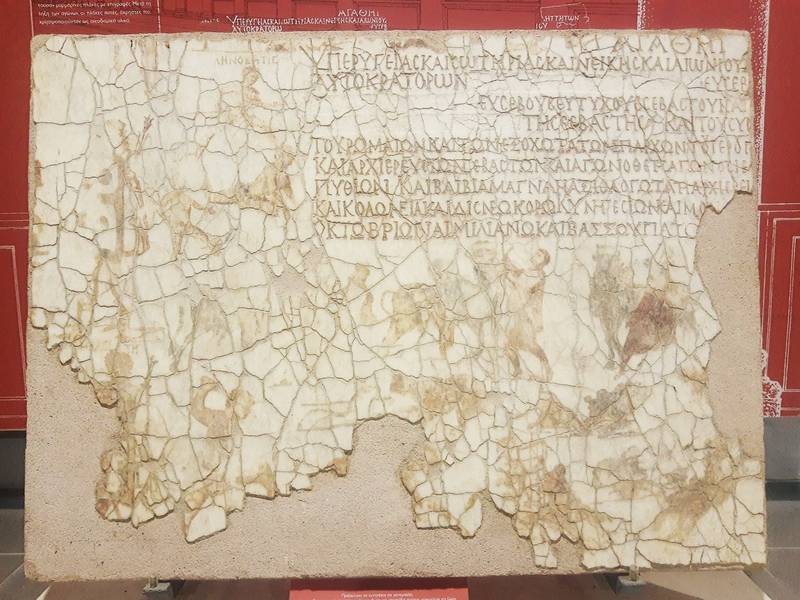
- Thessaloniki, Invitatio-Inschrift und Darstellungen von Gladiatorenkämpfen; AO: Thessaloniki, Agora-Museum (Photo: Rüdiger Gogräfe)
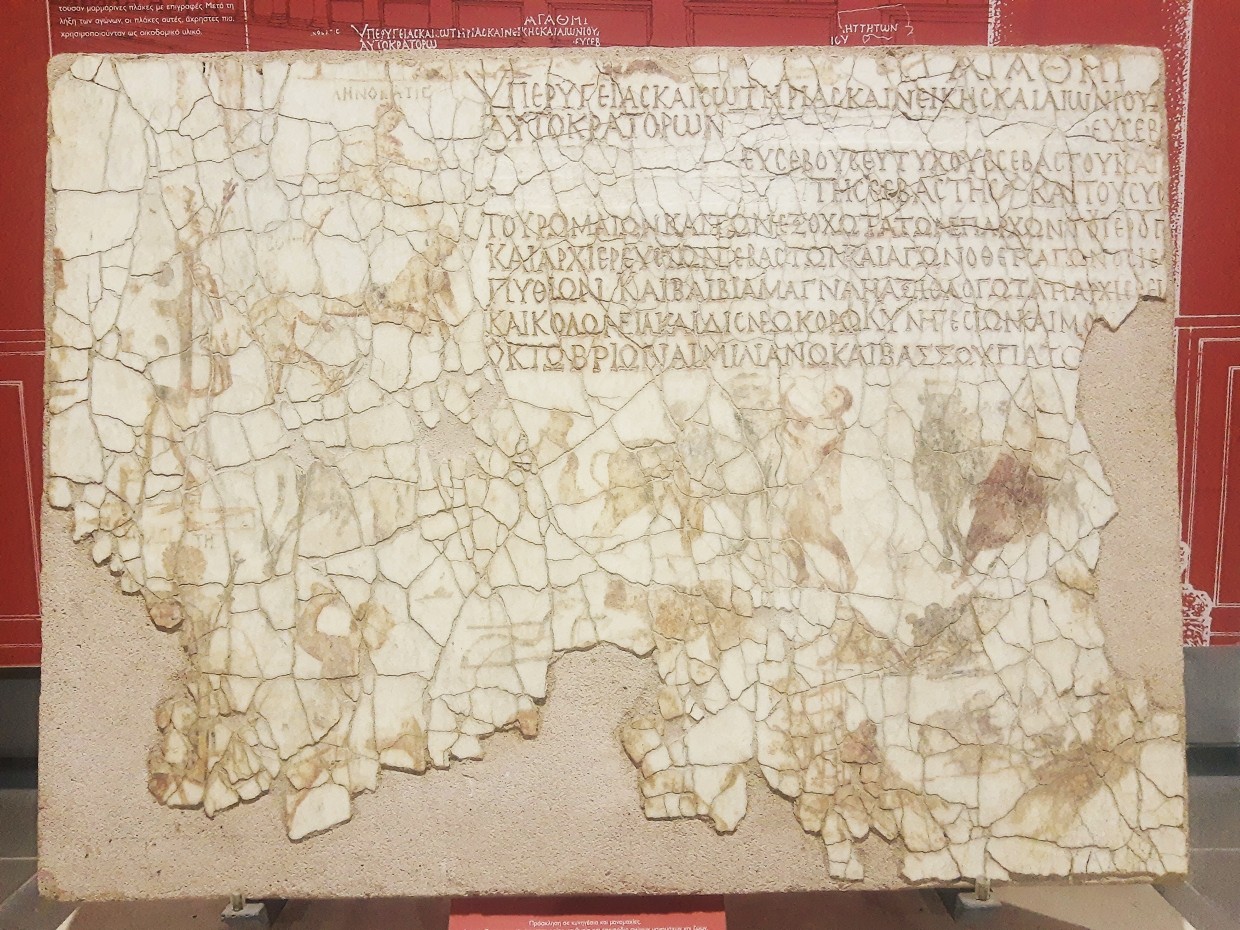
Invitatio-Inschrift; AE 1999, 1427; SEG 49, 817 (PHI)
Lit.: G. Veleni, Επιγραφές από την Αρχαία Αγορά της Θεσσαλονίκης, in: Αρχαία Μακεδονία VI.2 (Thessaloniki 1999) 1321-1322; P.M. Nigdelis, Επιγραφικά Θεσσαλονίκεια. Συμβολή στην πολιτική και κοινωνική ιστορία της αρχαίας Θεσσαλονίκης (Thessaloniki 2006) 75-76. 89-92.

- Grabstele des Strobilos, Museum Thessaloniki.

Grabrelief des Strobeilos (PHI); AO: Museum Thessaloniki:
Lit.: G. Velenis - P. Adam-Veleni, Ρωμαικο θεατρο στη Θεσσαλονικη, in: Το Αρχαιολογικό Έργο Στη Μακεδονία και στη Θράκη 1989, 251 Nr. 10 Taf. 14; BE 1992, 313; Michael J.D. Carter, The Presentation of Gladiatorial Spectacles in the Greek East: Roman Culture and Greek Identity, PhD Hamilton 1999, 316 Nr. 91.
- Grabstele des Peitherotas, Museum Thessaloniki (Photo: Rüdiger Gogräfe)
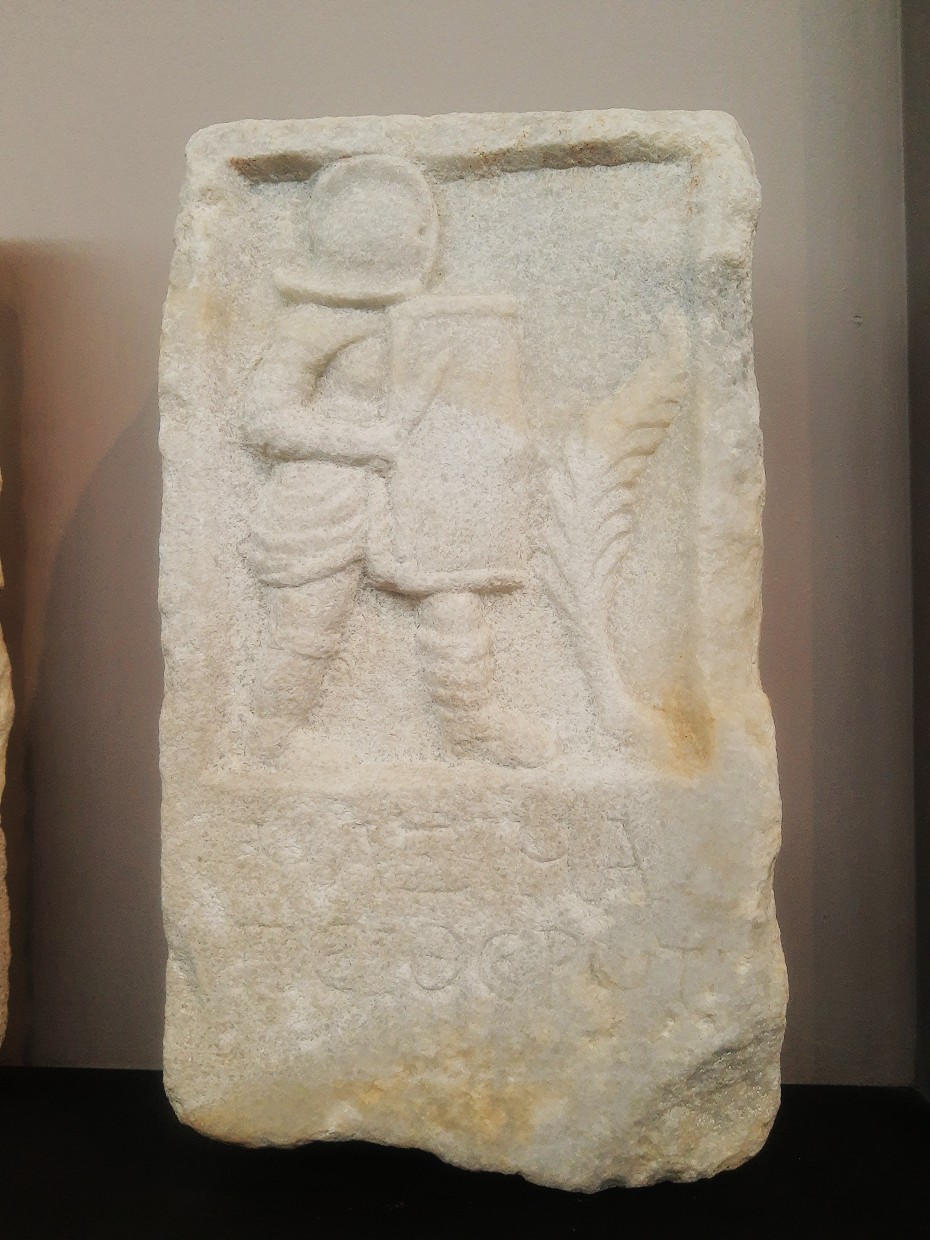
Peitherotas; IG X 2,1, 306 (PHI); AO: Museum Thessaloniki
Lit.: Michael J.D. Carter, The Presentation of Gladiatorial Spectacles in the Greek East: Roman Culture and Greek Identity, PhD Hamilton 1999, 316 Nr. 90.
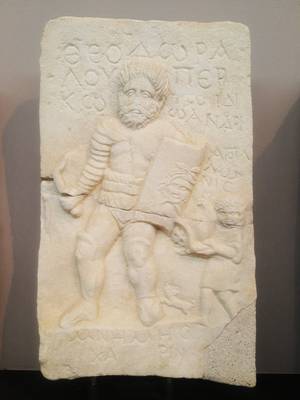
- Grabstele des Lupercus, Museum TRhessaloniki (Photo: Rüdiger Gogräfe)
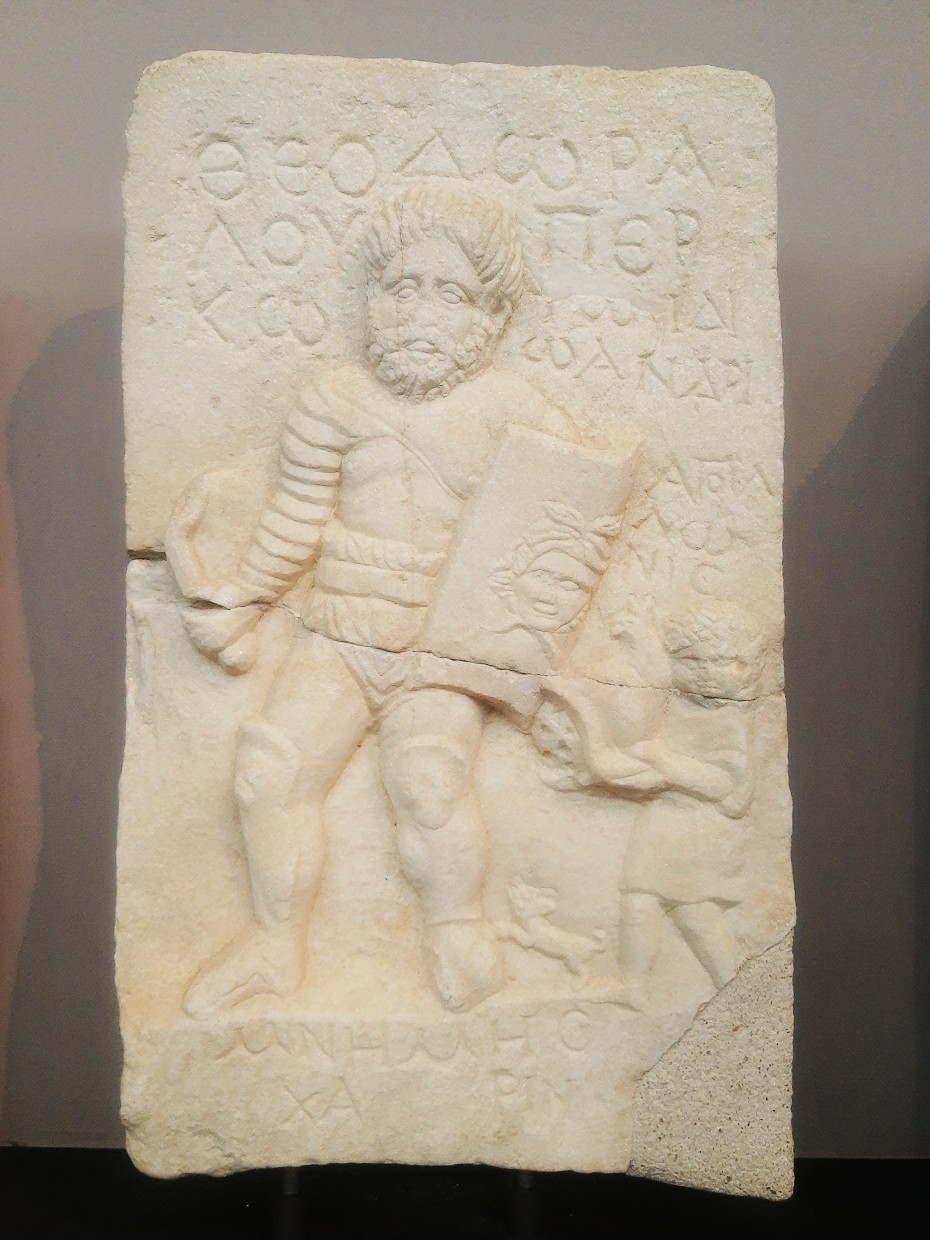
Grabstele des Lupercus; IG X 2,1, 300 (PHI); AO: Museum Thessaloniki:
Lit.: G. Velenis - P. Adam-Veleni, Ρωμαικο θεατρο στη Θεσσαλονικη, in: Το Αρχαιολογικό Έργο Στη Μακεδονία και στη Θράκη 1989, 251 Nr. 7 Taf. 11; Michael J.D. Carter, The Presentation of Gladiatorial Spectacles in the Greek East: Roman Culture and Greek Identity, PhD Hamilton 1999, 316-317 Nr. 92.
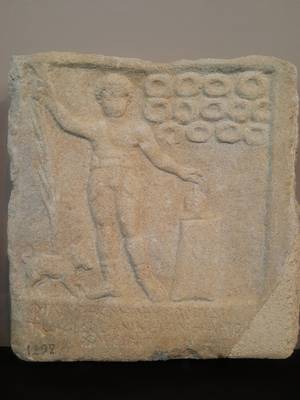
- Grabstele des Leukaspis, Museum Thessaloniki (Photo: Rüdiger Gogräfe)
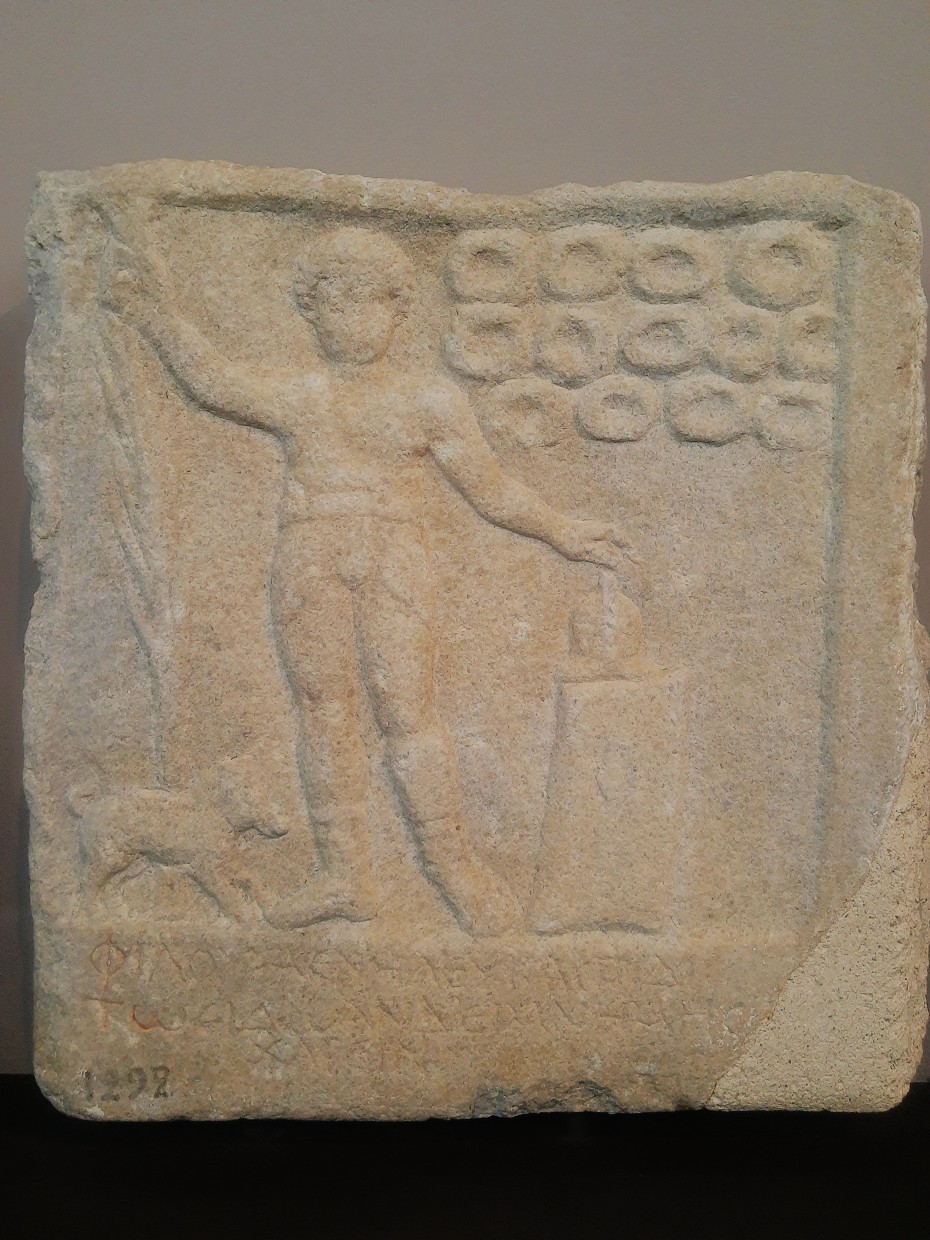
Grabstele des Leukaspis; IG X 2,1, 739 (PHI); AO: Museum Thessaloniki:
Φιλουμένη Λευκάσπιδι
τῷ ἰδίῳ ἀνδρεὶ μνήμη
χάρειν.
Lit.: G. Velenis - P. Adam-Veleni, Ρωμαικο θεατρο στη Θεσσαλονικη, in: Το Αρχαιολογικό Έργο Στη Μακεδονία και στη Θράκη 1989, 251 Nr. 9 Taf. 13; Michael J.D. Carter, The Presentation of Gladiatorial Spectacles in the Greek East: Roman Culture and Greek Identity, PhD Hamilton 1999, 317 Nr. 93; Polyxeni Veleni, Grave stelae and plaques in the Archaeological Museum of Thessaloniki - an initial typological and iconographic approach, in: Sepulkralna skulptura zapadnog Ilirika I susjednih oblasti u doba Rimskog Carstva = Funerary sculpture of the western Illyricum and neighbouring regions of the roman empire (Split 2013) 771. 789 Abb. 12 Mitte rechts.
Grabinschrift der Gladiatoren Kobios und Dekuratos
Lit.: BE 1994, 422; Michael J.D. Carter, The Presentation of Gladiatorial Spectacles in the Greek East: Roman Culture and Greek Identity, PhD Hamilton 1999, 317 Nr. 95.
Grabrelief:
Lit.: Ch. Avezou - Ch. Picard, BCH 1913, 115 Nr. 30; L. Robert, Les gladiateurs dans l'Orient grec, Bibliothèque de l`École des Hautes Études 278 (Paris 1940) 80 f. Nr. 14; Michael J.D. Carter, The Presentation of Gladiatorial Spectacles in the Greek East: Roman Culture and Greek Identity, PhD Hamilton 1999, 316 Nr. 89.
Sarkophag des Nepotianos Amyntianos; IG X 2,1, 550 (PHI); AO: Museum Tessaloniki
Αὐρηλία Ἡραεὶς Νεπωτιανῷ Ἀμυντιανῷ σεκουνδαρούδῃ
τῷ γλυκυτάτῳ συνβίῳ μνείας χάριν. οἰκουμένης.
Lit.: G. Velenis - P. Adam-Veleni, Ρωμαικο θεατρο στη Θεσσαλονικη, in: Το Αρχαιολογικό Έργο Στη Μακεδονία και στη Θράκη 1989, 251 Nr. 6 Taf. 19; Michael J.D. Carter, The Presentation of Gladiatorial Spectacles in the Greek East: Roman Culture and Greek Identity, PhD Hamilton 1999, 317 Nr. 96.